
Acne scar treatment in Korea
Rolling, boxcar and icepick scars respond to different things, and colour marks are not scars at all. What you have is established before a device is chosen.
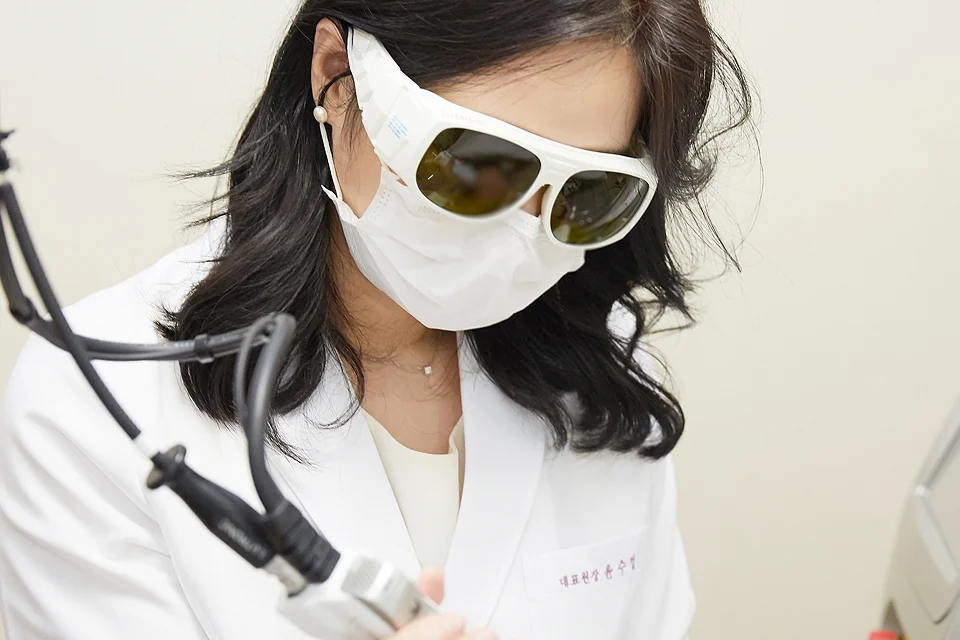
Getting acne scars treated in Korea
Assessment first, passport onlyAcne scarring is one of the most commonly over-sold treatments in Seoul, usually as a fixed package of a set number of laser sessions. The difficulty is that the word covers at least five distinct problems that behave differently, and a package priced before an examination has to assume they are the same.
The first appointment separates them. Bring a passport; Korean national health insurance is not required and does not cover this treatment. Consultation is in English. If you have had scar treatment before, bring what record you have, including device names and session counts.
Marks and scars are not the same thing
Colour versus contourA large proportion of what patients call scarring is colour rather than contour. Post-inflammatory erythema is the flat red mark left where a lesion was; post-inflammatory hyperpigmentation is the flat brown one. In both cases the skin surface is intact. They frequently resolve, and they respond to targeted treatment rather than to resurfacing.
True atrophic scarring is a loss of tissue, often with fibrous tethering pulling the floor of the scar down. No amount of pigment treatment will change it, and no amount of resurfacing will change a red mark. Treating one as though it were the other is the most common reason a course produces nothing.
Assessment under angled lighting separates them, because a flat red mark and a shallow rolling scar look identical under flat light and completely different when the light comes from the side.
Scar types
Most faces carry a mixture. Because the types respond differently, a course is planned by region rather than as one treatment applied uniformly.
Rolling
Broad, shallow depressions with sloping edges, tethered from underneath. Generally the most responsive, because releasing the tether and stimulating collagen both help.
Boxcar
Sharp vertical walls and a flat floor. Responds moderately. The aim is softening the edge so light no longer catches it, rather than filling the base.
Icepick
Narrow and deep, often deeper than any resurfacing device reaches. Usually treated individually rather than by passing a device over the whole area.
Hypertrophic and keloid
Raised rather than depressed, and more common on the jaw, chest and back. Treated by a different route entirely, and made worse by resurfacing.
Sequence
Acne, then colour, then contourActive acne is controlled first. Resurfacing skin that is still inflamed produces new lesions and new marks, and undoes the work. This step is not optional and it is the reason a scar course sometimes starts later than a patient expects.
Colour is treated next, because it is faster and because clearing it reveals how much genuine contour change is actually present. Patients regularly discover at this point that there is less scarring than they thought.
Contour is treated last, in sessions four to six weeks apart. Collagen remodelling continues for three to six months after each session, so the result of a course is judged well after the last appointment, not on the day.
Equipment used
Virtue RF. Microneedling radiofrequency, FDA cleared, with adjustable depth and integrated cooling. Energy is delivered below the surface, which is what makes it usable on skin types prone to post-inflammatory pigment.
Clarity II (Lutronic) for the colour component, at toning settings.
Rejuran and skin boosters where the priority is barrier recovery and dermal quality between resurfacing sessions.
Manufacturer-supplied consumables only. Single-use tips are a genuine counterfeit problem in this market, and a refilled tip does not deliver the energy the screen reports.
Frequently asked
Can acne scars be removed completely?
Atrophic scars are improved rather than erased. A realistic target for a full course is meaningful flattening and softened edges, not a return to unmarked skin. Red and brown marks left by past acne are a different matter and often clear fully, which is why they are separated from true scars at assessment.
What is the difference between a scar and a mark?
A mark is colour: red (post-inflammatory erythema) or brown (post-inflammatory hyperpigmentation). The skin surface is intact and time and targeted treatment usually clear it. A scar is a change in the tissue itself, with volume lost or fibrous tethering underneath. Marks and scars need different treatment and are frequently sold as the same package.
Which scar types respond best?
Rolling scars, which are tethered but shallow, generally respond best. Boxcar scars respond moderately. Icepick scars respond least to resurfacing and are usually better addressed individually. Most patients have a mixture, which is why a single device applied uniformly across the face gives uneven results.
Should I finish treating active acne first?
Yes. Resurfacing skin that is still breaking out produces new inflammation and new marks. The sequence is control the acne, let the inflammation settle, then treat what is left. Clinics that begin scar work during an active flare are working against themselves.
How long is the downtime?
It depends on the depth of treatment. Radiofrequency microneedling typically leaves the skin red and rough for two to four days. Deeper ablative work is longer and is planned around your schedule rather than proposed casually.
How many sessions?
Scar courses are measured in months, not weeks, because collagen remodelling continues for roughly three to six months after each session. Assessing the result of a session at two weeks underestimates it. Intervals are usually four to six weeks.
Can this be done while I am travelling?
A single session can, provided the downtime fits your plans and you are not due to fly immediately after. A full course cannot. Follow-up can continue by message once you are home.
Do I need Korean health insurance?
No. A passport is enough to register. Scar treatment is not covered by Korean national health insurance, so residents and visitors pay the same private rate.
Ask about your scarring
Send a photograph under side lighting and tell us when you are in Seoul. We reply within one business day.