
Dr. Su Jung Yoon
You see the same doctor at consultation, at dose changes, and after you fly home. Dr. Yoon consults in English without an interpreter, and her obesity research on 9,519 adults was published in PLOS ONE.
YOON CLINIC, the clinic she runs
YOON CLINIC is registered in Korea as 윤수정의원. It is a single clinic with a single doctor: Dr. Su Jung Yoon examines, prescribes, and follows up herself. There is one location and no branches.
- 4F, Room 402, Hana Bank Building, 109 Dongjak-daero, Dongjak-gu, Seoul
- Isu Station, Line 4 Exit 13 or Line 7 Exit 12, about twenty metres
- Not in Gangnam — Dongjak-gu is one district west, about fifteen minutes by subway
- Monday, Tuesday, Thursday 10:00–18:30 · Friday 10:00–20:00 · Saturday 10:00–15:00
- Closed Wednesday and Sunday. Lunch 13:00–14:00, except Saturday. Open on public holidays
- Consultations in English or Korean, with the doctor, no interpreter
- +82-2-517-9996 · yoonclinic5179996@gmail.com
Training and appointments
- Board-certified specialist in family medicine
- Ewha Womans University School of Medicine
- Residency, Korea University Medical Center
- Adjunct professor, Korea University Medical Center
- Clinical training, University of Florida Shands Hospital, USA
- Member, Korean Society for the Study of Obesity
- Member, Korean Society of Clinical Nutrition
- Academic Director, Korean Academy of Cosmetic Surgery
Research and teaching
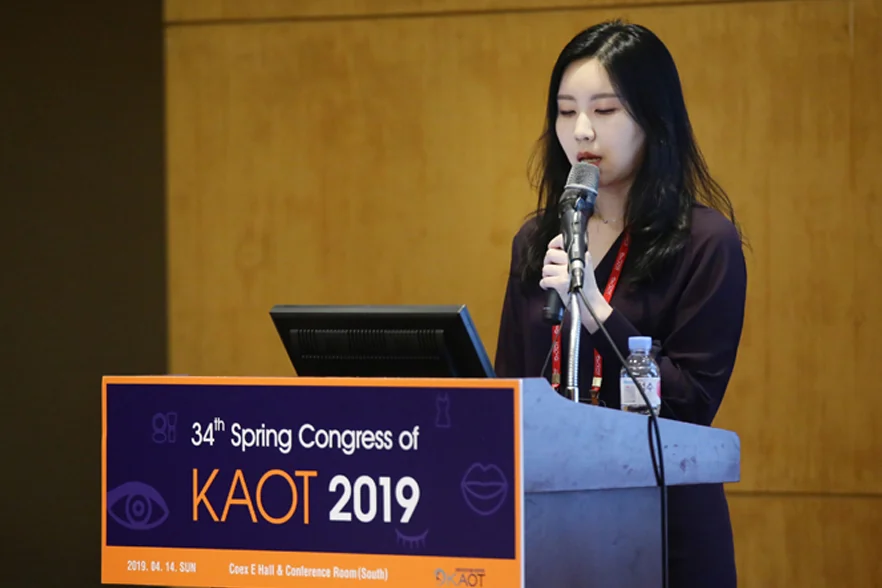
Dr. Yoon is the first author of research published in PLOS ONE on obesity, abdominal obesity, and hypertension control in Korea, and lectures to practising physicians on obesity treatment, including at the Korean Academy of Obesity Treatment spring congress.
She has served as a medical advisor to Korean broadcast health programmes on TV Chosun, MBN, KBS, and SBS.
How she practises
Consultations are held in English with the doctor directly, with no interpreter relay. Prescriptions follow an in-person examination, doses are escalated only when the previous step is tolerated, and follow-ups continue remotely after patients leave Korea.
Weight is not read on its own. InBody body composition is taken at the first visit so that muscle loss is visible if it happens, and bloodwork is offered where it is clinically indicated rather than as a package everyone buys.
Dose escalation stops when side effects do not settle. A patient who is still nauseated at the end of four weeks stays on the same dose for another four rather than moving up on schedule.
What she does not do
Medication is not dispensed without an examination, and it is not posted to patients who have never been seen. Korean law requires an in-person consultation for a first prescription, and the clinic follows that.
Doses are not started at a high step to produce faster results. There is no foreign-patient price and no agency commission: the price list is the same one used for Korean patients.
Ask about your dose
Tell us what you take now and when you are in Seoul. We reply within one business day.